Barbed Wire Fence Installation Services in Morristown, TN
Barbed Wire Fence Installation Kings provides barbed wire fence installation, pasture and boundary fencing, and barbed wire security tops for chain link in the Morristown, TN area for farms, ranches, rural homes, and commercial properties. Contact us now for a free estimate.
How Much Does Barbed Wire Fence Installation Cost in Morristown, TN?
Barbed wire fence installation in Morristown, TN costs anywhere from $1,700 to $4,250 on average for about 1,000 feet of 4 or 5 strand fence on steel T-posts with braced corners. The price depends on the total length, the number of strands, wire type, post type and spacing, how many corners and gates there are, rock, slope, and brush, and any old fence removal.
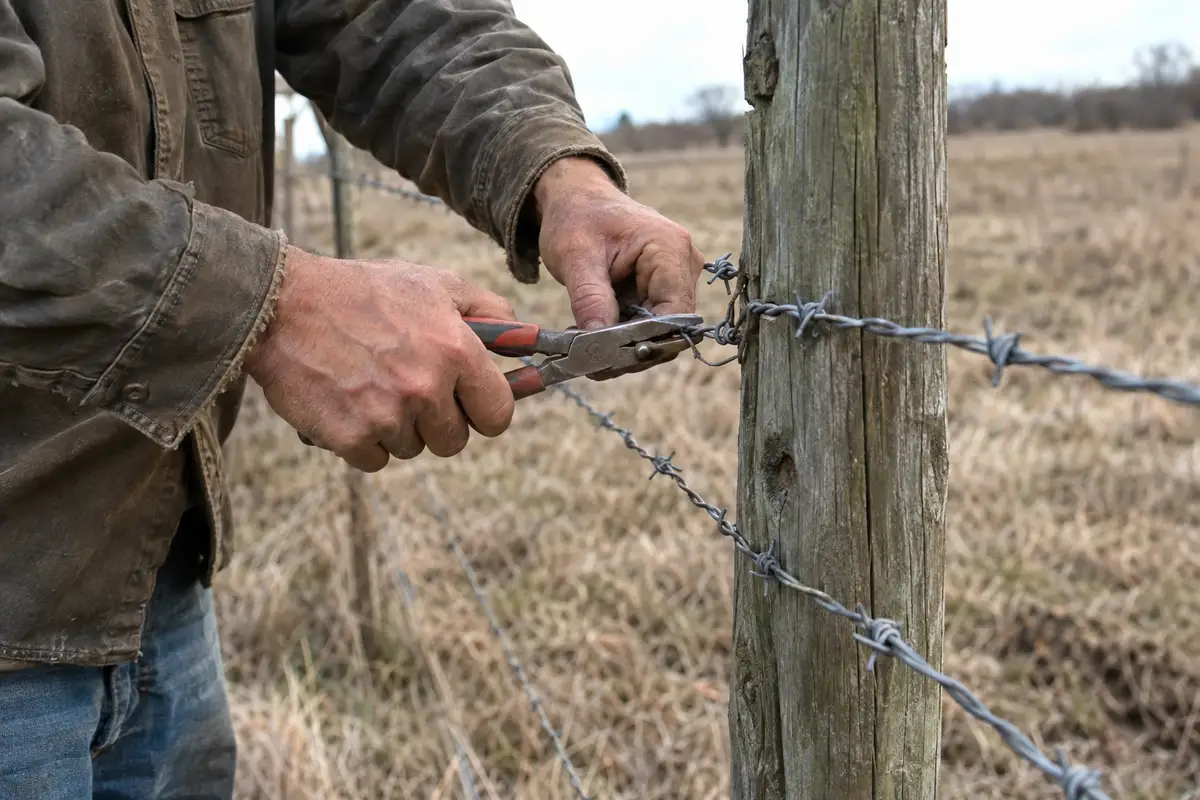
Do You Install Barbed Wire Fence for Farms, Ranches, and Businesses?
Yes, we build barbed wire fence for pastures, ranches, rural homes, and acreage, and we add barbed strands to security fences at commercial and industrial sites. Tell us what the fence needs to hold in or keep out.
Do You Service My Area?
Yes, we cover the Morristown, TN area. Send us the property address and we'll confirm.
Is Barbed Wire Fence Priced by the Foot?
Yes, we usually quote per foot, typically $1.50 to $6 installed. Corners, gates, and braces cost the same however long the run is, so short fences with many corners cost more per foot.
How Soon Can You Start My Barbed Wire Fence?
Start dates depend on the season and how much fence we have booked. We can give you a date once we know the length and the line is clear, so tell us if stock has to be fenced by a set day.
What Information Do You Need for a Barbed Wire Fence Quote?
We need the address, the rough length or a map of the fence line, how many strands, the animals involved, and how many gates and corners. Mention rock, slopes, creeks, brush, and any old fence that has to come out.
Will I Need to Be There While You Build the Fence?
No, as long as we can reach the fence line and the corners and gates are marked. It helps to walk the line with us before we set the first post.
Is Barbed Wire Fence Legal on a Residential Property?
Yes, in most rural and agricultural areas, but many towns and cities ban or limit barbed wire on residential lots. Your local zoning office decides, so check before we order wire for a lot in town.
Do I Need a Permit for a Barbed Wire Fence?
No, not usually for farm fence in rural areas, but some counties and cities want a permit or zoning approval, especially for security fencing. Your local building or zoning office decides, and we can help you find out.
Do I Need a Survey Before You Fence My Property Line?
Yes, if the fence goes on or near the boundary and the corners aren't clearly marked. We build where the line is marked, and moving a fence later costs far more than a survey.
Will My Neighbor Share the Cost of a Boundary Fence?
Yes, in some states. Some state fence laws split the cost of a shared line fence between the owners on each side, but the rules differ from state to state, so check yours before we start.
Can I Get a Price Before the Work Begins?
Yes, we confirm the price before starting. If we hit solid rock or buried debris along the line, we talk to you before doing any extra work.
How Long Does Barbed Wire Fence Installation Take?
We typically build 500 to 1,000 feet a day on open, level ground, so 1,000 feet usually takes 1 to 3 days. Rock, brush, slopes, and gates add time.
How Many Strands of Barbed Wire Do I Need?
Most perimeter and cattle fences we build use 4 or 5 strands. Three strands is common for interior cross fences, and five is the usual choice for boundary fence along roads and neighbors.
How Far Apart Do You Space the Strands?
We usually space strands about 8 to 10 inches apart, with the top wire around 48 inches off the ground. The bottom wire sits closer to the ground when calves or smaller stock need holding.
How Far Apart Do You Space the Posts?
We usually set line posts 8 to 16 feet apart, closer on hills and curves.
What Posts Do You Use for a Barbed Wire Fence?
We use steel T-posts for most line posts, often with a wood or pipe post every few posts for extra strength. Corners, ends, and gates get large treated wood or steel pipe posts set deep.
Which Is Better, 2-Point or 4-Point Barbed Wire?
Four-point wire has four points on each barb, and we use it where animals crowd the fence, like pens and lanes. Two-point wire is usually enough on open pasture.
Which Is Better, High Tensile or Standard Barbed Wire?
High tensile barbed wire is thinner, lighter, and resists stretching, so we like it for long runs. Standard 12 1/2 gauge wire is heavier and stretches more over the years.
Can You Build a Barbed Wire Fence for Cattle?
Yes, cattle are what most barbed wire fence is built for. Tell us whether you run cows and calves or bulls, since that changes the strand count, the barb type, and where the bottom wire sits.
Is Barbed Wire Safe for Horses?
No, we don't recommend it for horses. A horse caught in barbed wire tends to panic and can be badly cut, so horse pastures are better fenced with boards, smooth wire, or a horse safe mesh.
Will Barbed Wire Keep In Sheep and Goats?
No, sheep and goats slip through or under the strands, so we usually recommend woven wire for them.
Can You Electrify a Barbed Wire Fence?
No, barbed wire should never be electrified, but we can add a separate smooth electric wire if you want a hot fence.
Can You Add Barbed Wire to the Top of a Chain Link Fence?
Yes, we fit barb arms to the tops of the posts and run barbed strands on them, either straight up or angled 45 degrees outward. Many towns restrict this outside commercial or industrial zones, so check first.
Can You Install Razor Wire Instead of Barbed Wire?
Yes, for security fences we can run coiled razor wire on top of chain link. It's harder to get past than barbed strands, but it isn't allowed everywhere, so check local rules first.
Can You Add Barbed Wire Along the Top of a Woven Wire Fence?
Yes, a barbed strand just above woven wire stops cattle leaning over it.
Can You Build a Wildlife Friendly Barbed Wire Fence?
Yes, a lower top wire, a smooth bottom wire, and wider spacing between the top two strands let deer, elk, and pronghorn jump over or crawl under. Some state wildlife agencies publish specs, and we follow them when you ask.
Can You Install Gates in a Barbed Wire Fence?
Yes, we hang tube gates, wire-filled gates, and wide vehicle gates. Each gate opening gets braced posts on both sides so the wire tension doesn't pull the gate posts over.
Can You Fence a Whole Pasture or Several Acres?
Yes, large pastures and miles of boundary are where barbed wire makes the most sense, since the cost per foot drops on long straight runs. A square 1 acre field takes about 835 feet. Send us a map with the line drawn on it.
Can You Build Barbed Wire Fence on Hills and Uneven Ground?
Yes, we set posts closer on rough ground, with a post at the top of each rise and the bottom of each dip. Steep grade changes get their own brace so the wire doesn't lift posts out of low spots.
Can You Build Barbed Wire Fence in Rocky Ground?
Yes, though rock slows post driving and may mean drilling pilot holes for the posts. It's one of the biggest things that moves the price, so tell us how rocky the line is.
Can the Fence Cross a Creek or Ditch?
Yes, we brace both sides of a wide crossing and hang a floodgate that swings with high water instead of trapping debris. Let us know how wide the creek gets after a heavy rain.
Can You Replace My Old Barbed Wire Fence?
Yes, we pull the old wire and posts, haul them away, and build new fence on the same line. Removal is usually quoted separately, typically $1 to $4 a foot.
Do You Clear Brush Along the Fence Line?
Yes, the line has to be clear and fairly smooth before posts go in. Clearing is usually priced by the foot on top of the fence, so tell us how thick the brush or trees are.
Do I Need to Call 811 Before You Drive Posts?
No, we usually place the 811 request before driving posts. It marks utility-owned gas, power, and water lines but not private ones like well lines or buried power to a barn, so point those out.
Should I Move My Livestock Before You Start?
Yes, keep animals out of the work area while we stretch wire. Loose coils and wire under tension are dangerous to stock, and cattle tend to wander through an unfinished line.
How Do You Brace the Corners of a Barbed Wire Fence?
We build an H-brace at every corner, end, gate, and sharp turn, with a horizontal brace between two posts and a tightened diagonal brace wire. Long straight runs also get in-line braces every few hundred feet.
How Tight Should a Barbed Wire Fence Be?
Tight enough that a 100 foot span sags no more than about 4 inches in warm weather. We stretch each strand with a fence stretcher, never a tractor, because a snapped wire can whip back hard.
Which Side of the Posts Does the Wire Go On?
We put the wire on the livestock side of the line posts, so animals pushing the fence press it against the posts instead of popping the clips. On corners, it goes on the outside.
Can I Install a Barbed Wire Fence Myself?
Yes, many landowners do, but it takes a post driver, a wire stretcher, heavy gloves, and eye protection, since wire under tension can whip back and cut. We can quote the job if you'd rather not.
How Long Does a Barbed Wire Fence Last?
A well-built barbed wire fence typically lasts 15 to 25 years. Heavier galvanizing, good braces, and keeping trees and brush off the wire help it last longer.
